식구: When “Family” Means the People You Eat With
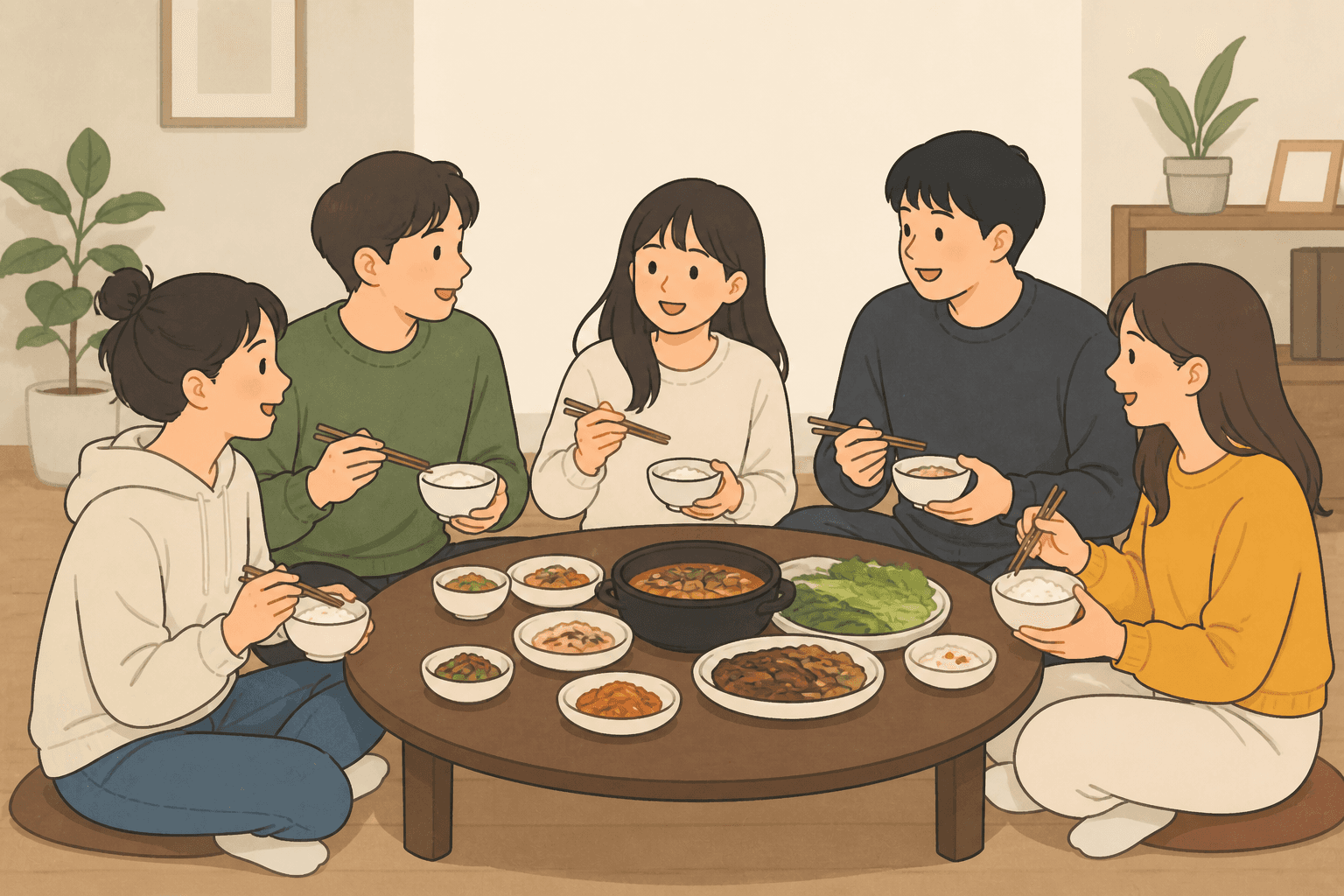
In Korean, the word family isn’t always just 가족 (gajok). There’s another word—식구 (sikgu)—that reveals something deeper about how relationships are understood in Korea.
At its core, 식구 literally means “people who eat together.”
식 (食) = food, eating
구 (口) = mouth, person
So instead of defining family by blood or legal ties, 식구 defines it by shared daily life—especially meals.
More Than Blood: A Social Definition of Family
In many Western contexts, “family” tends to emphasize lineage—parents, siblings, relatives. But 식구 shifts the focus to connection through routine and care.
If you regularly share meals with someone—live together, support each other, experience everyday life side by side—they can be considered 식구, even if you’re not related.
This means:
Roommates can become 식구
Close colleagues (especially in older workplace culture) might be called 식구
Even long-term friends can be seen this way
It’s less about who you are on paper, and more about who you live life with.
Why Food Matters So Much
To understand 식구, you have to understand the importance of food in Korean culture.
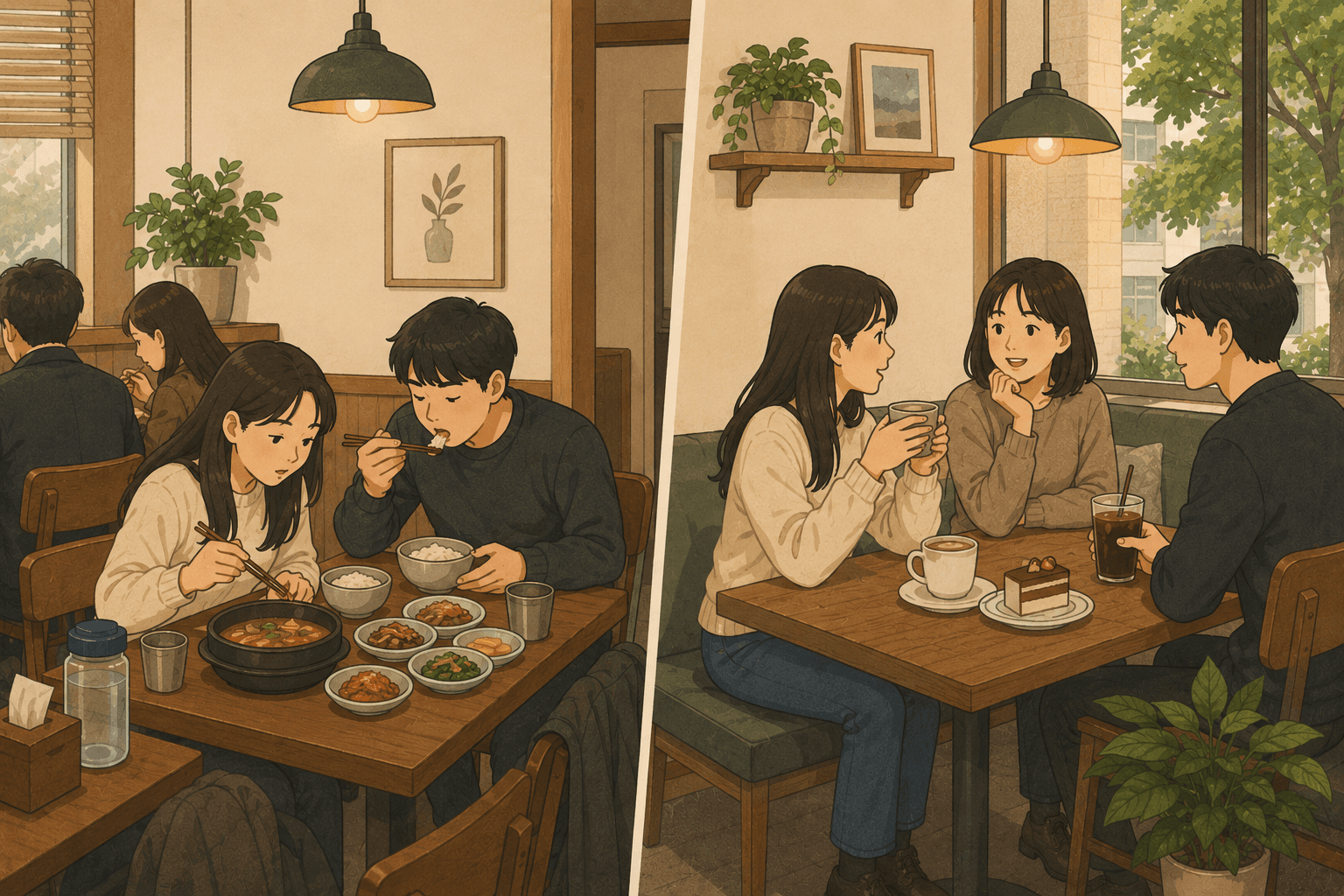
Meals in Korea are rarely just about eating. They are:
A time for bonding
A way to show care (cooking for someone = taking care of them)
A daily ritual of connection
This is why one of the most common greetings in Korean is:
“밥 먹었어?” (Have you eaten?)
It’s not really about food—it’s about checking in on someone’s well-being.
So when someone is your 식구, it implies:
You don’t just share space
You share life, care, and responsibility
Emotional Weight of the Word
Calling someone 식구 carries warmth and closeness. It suggests:
Trust
Comfort
Belonging
It’s a word often used in small businesses or teams too. A restaurant owner might refer to their staff as 우리 식구 (“our family”), signaling that they are more than just employees—they’re part of a shared life.
A Cultural Insight
식구 reflects a broader Korean value: relationships are built through shared experiences, not just defined structures.
It answers a deeper question:
Who is really your family?
In Korean culture, the answer might simply be:
The people you eat with.
Quick Takeaway for Your Survival Guide
If you want to understand Korean culture, remember this:
가족 = family by blood/legal ties
식구 = family by shared life
And if someone starts treating you like 식구—inviting you to meals, checking if you’ve eaten, including you in everyday moments—you’ve crossed an invisible but meaningful line.
You’re no longer just an outsider.
You belong.