Why Koreans Are So Obsessed With MBTI
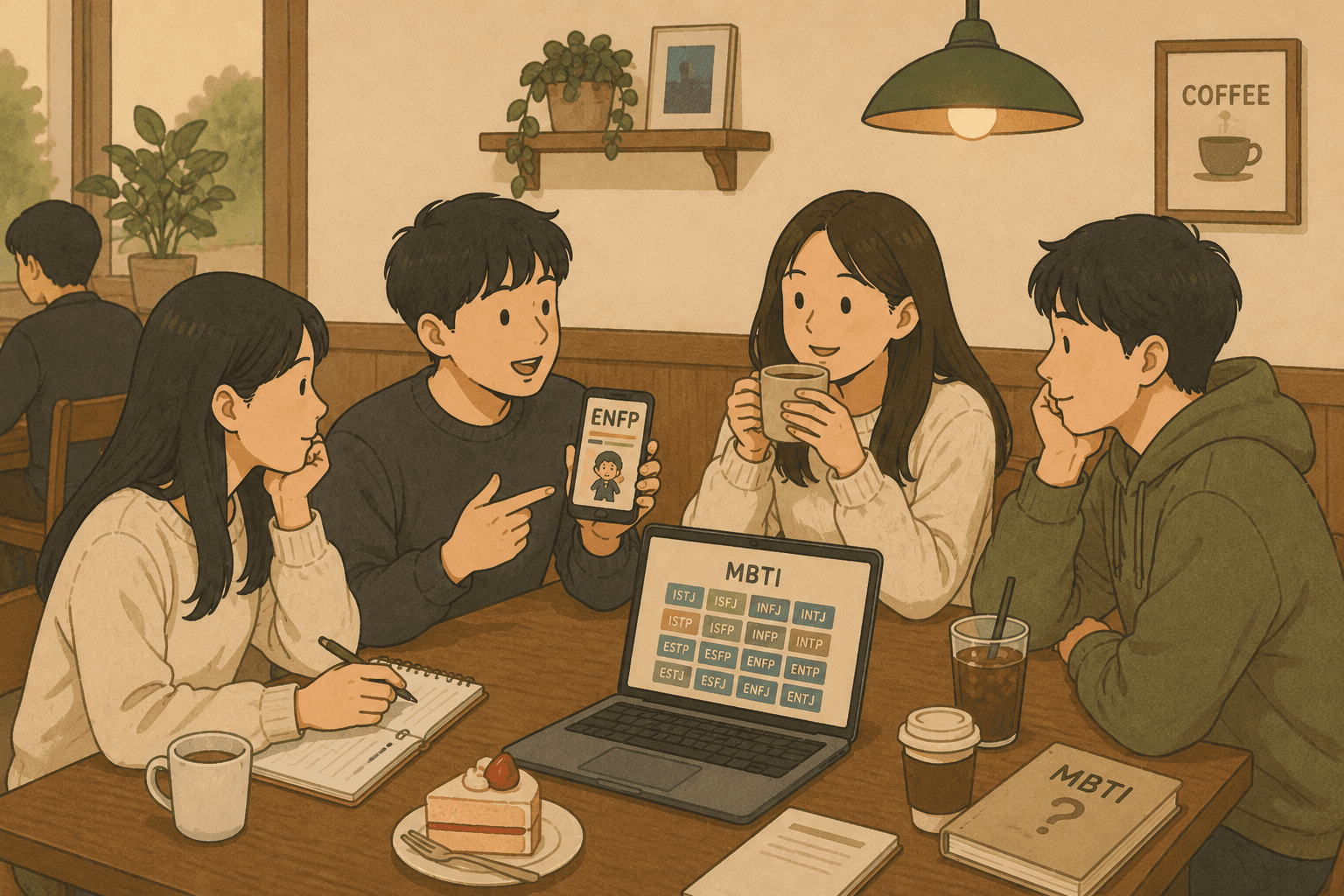
If you spend time in Korea, there’s a good chance someone will ask you a surprisingly specific question very early on:
“What’s your MBTI?”
For many foreigners, this can feel strange at first. In other countries, personality tests are often treated as casual internet quizzes or workplace exercises. But in Korea, MBTI has become something much bigger—almost a cultural phenomenon.
People discuss it at cafés, on dates, in classrooms, at work, and across social media. Some Koreans can even immediately describe stereotypes, habits, or relationship dynamics associated with all 16 personality types.
At times, it can feel almost like astrology.
But why did MBTI become so popular in Korea?
Part of the reason is that Korean society places a strong emphasis on social harmony and understanding others. Because relationships and group dynamics are so important, many people are naturally interested in systems that help explain personalities and communication styles.
MBTI offers a simple and easy framework for this.
Instead of slowly figuring someone out over time, asking their MBTI gives people a quick conversational shortcut:
Are they outgoing?
Quiet?
Logical?
Emotional?
Organized?
Spontaneous?
It becomes an easy social icebreaker.
This fits especially well with Korea’s highly social and fast-moving culture, where people often meet through schools, workplaces, group gatherings, dating apps, and mutual connections. MBTI creates instant topics for conversation and comparison.
You’ll often hear things like:
“That’s such an ENFP thing to do.”
“INTJs are scary.”
“We’re not compatible.”
“I knew you were an INFP.”
Of course, most people don’t take it completely literally. For many Koreans, MBTI is less about scientific accuracy and more about playful social bonding.
It also exploded in popularity during the COVID era, especially among younger generations online. YouTube interviews, dating content, memes, and celebrity MBTI discussions made it spread rapidly throughout Korean internet culture.
Today, MBTI is so common that some people even include it in dating profiles or introductions alongside age and occupation.
For foreigners, this obsession can seem intense at first.
But in many ways, MBTI in Korea reflects something deeper:
a strong interest in understanding how people think, behave, and relate to one another.
In a society where reading the room matters, personality becomes social information.
And MBTI gives people a shared language to talk about it.